
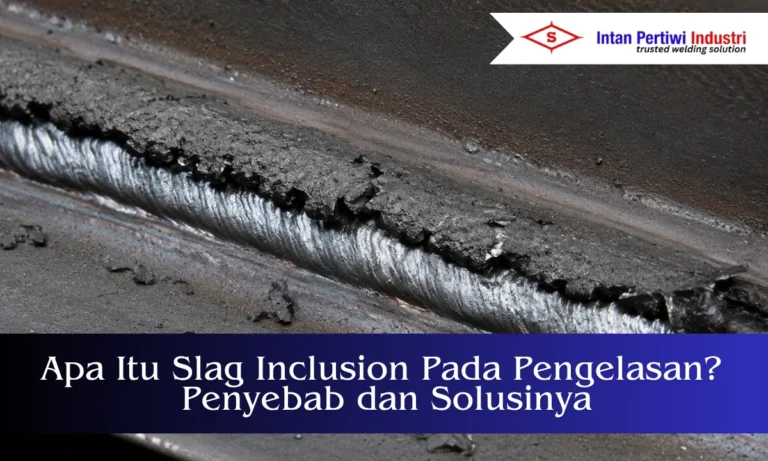
In the welding process, the quality of the joint is determined not only by the external appearance of the weld, but also by the internal condition of the weld metal. One welding defect that often attracts attention is slag inclusion.
These defects can affect the strength of the joint and reduce the quality of the weld if not prevented properly.
Table of Content
ToggleUnderstanding Slag Inclusion
Slag inclusion is a welding defect that occurs when slag or slag is trapped in the weld metal. Slag itself comes from the flux layer on the electrode or certain additional materials that function to protect the weld area from air contamination during the welding process.
Under normal conditions, slag will rise to the surface and be cleaned away after welding is completed. However, if the welding technique is not correct, slag can remain between the weld layers or within the joint. This condition is known as slag inclusion.
Causes of Slag Inclusion
The causes of slag inclusion are quite varied, ranging from less than optimal slag cleaning between layers, incorrect electrode angle, welding current that is too low, inappropriate welding speed, to the shape of the weld that is too narrow.
In multi-pass welding, the risk of slag inclusion is typically greater if each weld layer is not thoroughly cleaned before the next layer is applied. Furthermore, unstable electrode swinging techniques can also result in slag remaining in the weld line.
How to Prevent Slag Inclusion
- Clean slag or slag thoroughly after each welding pass.
- Make sure that cleaning between layers is done properly, especially in multi-pass welding.
- Use a welding current that matches the type and diameter of the electrode.
- Keep the electrode angle stable during the welding process.
- Adjust the welding speed so that it is not too fast or too slow.
- Ensure the joint or seam design has sufficient space for penetration and weld metal flow.
- Use welding electrodes that suit the material and job requirements.
- Follow proper welding procedures, including current settings, welding positions, and work parameters according to standards.
Impact on Construction
- Reduces the strength of the welded joint.
- Reduces joint resistance to workload.
- Potentially the starting point for cracks in the material.
- Reduces the reliability of steel structures, pipes, tanks, work platforms, factory equipment and machine components.
- Increases the risk of joint failure when used in heavy construction or fabrication work.
- Making welding results not meet the quality standards required in industrial work.
How to Repair Slag Inclusions
- Identify weld areas that have slag inclusions.
- Remove defective weld parts by grinding or gouging according to work procedures.
- Clean the defect area until healthy base metal or weld metal is visible.
- Ensure the area is free of slag, oxides, oil, dust, or other contaminants.
- Re-weld with more precise parameters.
- Adjust the current, electrode angle, travel speed, and welding technique to prevent defects from recurring.
- If the work meets certain standards, make repairs based on the WPS and applicable quality inspection procedures.
SMAW Welding Electrode Recommendations
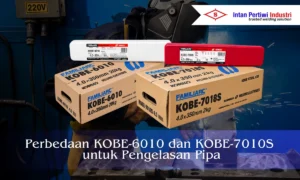
For SMAW welding, selecting the right welding electrode or electrode is crucial for achieving good welding results. The right electrode can help produce a stable arc, easier slag removal, and consistent weld deposits.
As a KOBELCO welding electrode manufacturer in Indonesia, PT Intan Pertiwi Industri presents welding electrode products to support various industrial welding needs.
By selecting the right electrode, using the correct welding technique, and following proper work procedures, the risk of defects such as slag inclusion can be minimized, resulting in stronger, neater, and more reliable welding results.
Conclusion
Slag inclusion is a welding defect caused by slag being trapped within the weld metal. This defect can generally be prevented through cleaning between layers, proper welding parameter settings, correct welding technique, and the use of quality electrodes.
For industrial welding needs, PT Intan Pertiwi Industri provides KOBELCO welding electrode as a supporting solution for consistent and high-quality welding results.

FAQs
What is slag inclusion in welding?
Slag inclusion is a welding defect that occurs when slag or slag is trapped within the weld metal and does not escape to the surface after welding. This condition typically occurs in welding processes that use flux, such as SMAW. If left untreated, slag inclusion can degrade the quality of the joint and create a weak point in the weld.
What causes slag inclusion?
Slag inclusion can be caused by several factors, such as inadequate slag removal between layers, too low a welding current, an incorrect electrode angle, an inappropriate welding speed, and a weld that is too narrow. In multi-pass welding, this risk is even greater if each weld layer is not properly cleaned before the next weld is applied.
Are slag inclusions dangerous?
Yes, slag inclusions are dangerous because they can reduce the strength of a weld joint and prevent the weld from meeting required quality standards. This defect can become a weak point in the material, especially if the joint is used in construction, pipes, tanks, or industrial components that experience high loads and require long-term reliability.
How to prevent slag inclusion?
Slag inclusion can be prevented by thoroughly removing slag after each weld, using the appropriate welding current, maintaining a stable electrode angle, and adjusting the welding speed appropriately. Furthermore, selecting the appropriate welding electrode and implementing the correct welding procedure are also crucial for producing a strong, clean joint.