
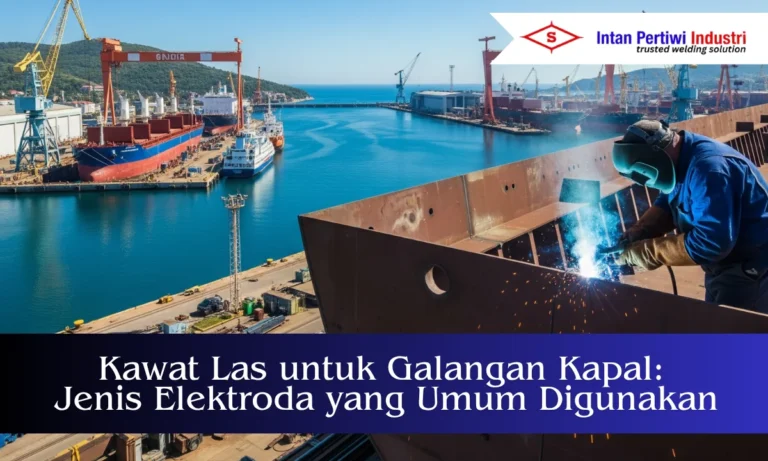
The shipbuilding industry requires welding materials capable of producing strong, dynamic-load-resistant joints with consistent quality. Therefore, the selection of welding electrode for shipbuilding must not be done haphazardly. The type of electrode must be matched to the ship's materials, the welding position, and the specific requirements for fabrication or repair.
PT Intan Pertiwi Industri supplies various types of welding electrodes commonly used in the shipbuilding industry, ranging from carbon steel, high-tensile steel, and stainless steel to hardfacing electrodes.
Table of Content
ToggleWhy Is the Selection of Welding Electrode Crucial in Shipyards?
During ship construction and maintenance, every welded joint must be capable of withstanding vibrations, operational loads, and the relatively extreme marine environment. The use of suitable electrodes can offer several advantages, such as:
- Produces good penetration and joint strength.
- Reduces the risk of cracking and weld defects.
- Facilitates the welding process in various positions.
- Extend the service life of the ship's structure.
- Helps maintain the quality of fabricated products in accordance with industry standards.
Commonly Used Types of Welding Electrode for Shipyards
1. RB-26 for General Carbon Steel Welding
RB-26 is a general-purpose electrode for welding mild carbon steel, widely used in the fabrication of ship components.
Application:
- Brackets
- Ship's ladder
- Engine mount
- Secondary structure
- Common fabrication components
Superiority:
- Easy to use.
- The bow is stable.
- The slag is easy to clean off.
- Suitable for various welding positions.
2. B-17 for Ship Steel Structures
B-17 is used for welding carbon steel where good joint strength is required in various shipbuilding fabrication tasks.
Application:
- Ship frame
- Deck support
- Steel structure
- Ship construction components
Superiority:
- Good penetration.
- Neat weld deposit.
- Suitable for daily fabrication work.
3. LB-52 Series for High-Strength Structures
The LB-52, LB-52-18, and LB-52U series are low-hydrogen electrodes commonly used when high-strength joints and resistance to the risk of hydrogen cracking are required.
Application:
- Main ship structural connection.
- Hull (ship's hull).
- Main deck.
- Components subject to high loads.
Superiority:
- High tensile strength.
- The risk of hydrogen cracking is lower.
- Good joint toughness.
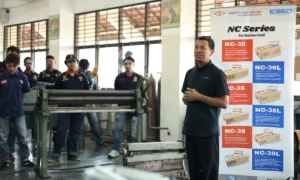
4. NC Series for Stainless Steel Material
For ship components using stainless steel, the following series are available:
- NC-36 / NC-36L
- NC-38 / NC-38L
- NC-39 / NC-39L
The type is selected based on the grade of stainless steel being welded.
Application:
- Stainless steel tank.
- Pipe.
- Ship piping system.
- Onboard processing equipment.
- Corrosion-resistant component.
Superiority:
- Good corrosion resistance.
- The weld finish is clean.
- Suitable for various stainless steel applications.
5. HF Series for Repairing Worn Components
In shipyards, certain components are subject to abrasion or friction during operation. For such conditions, hardfacing electrodes such as the following can be used:
- HF-350
- HF-500
- HF-600
Application:
- Roller.
- Specific shaft.
- Buckets.
- Wear plates.
- Components subject to wear.
Superiority:
- Higher wear resistance.
- Extend component lifespan.
- Reduces the frequency of spare part replacements.
6. CI Series for Welding Cast Iron
Cast iron components on ships or shipyard facilities can be repaired using:
- CI-A1
- CI-A2
Application:
- Pump housing.
- Engine casing.
- Other cast iron components.
How to Choose Welding Electrode for Shipyards
Before selecting welding electrodes for ships, consider the following factors:
- The type of material to be welded.
- Required joint strength.
- Welding position.
- Work environment and corrosion potential.
- The function of the component—whether for new fabrication or repair.
By selecting the right welding electrode for shipyards, joint quality is optimized and the welding process becomes more efficient.
Conclusion
The selection of welding electrodes for shipyards must be tailored to the material type and the welding application. For carbon steel, RB-26 or B-17 can be used, whereas high-strength structures generally utilize the LB-52 series.
The NC Series is available for stainless steel materials, while the HF Series can be used for hardfacing requirements, and the CI Series is used for cast iron repairs.
By using suitable electrodes, the processes of ship fabrication and maintenance can yield strong, stable weld joints that offer more reliable performance in support of maritime industry operations.