
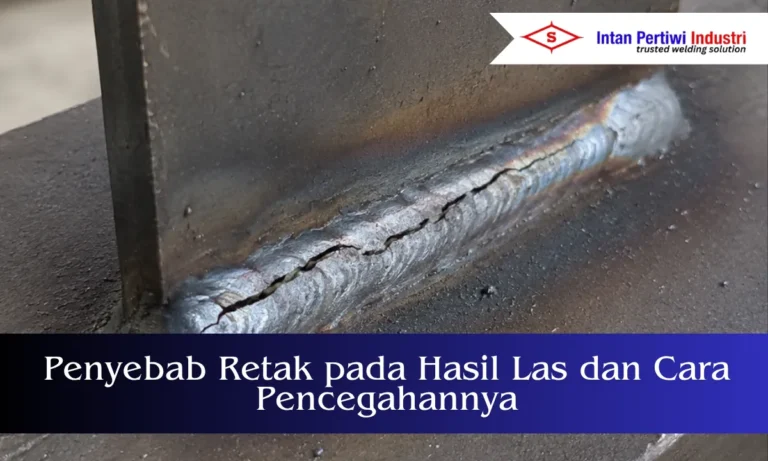
One of the causes of cracking in welds is a combination of stress, uncontrolled cooling, hydrogen content, and improper welding procedures. Weld cracking is among the most serious welding defects.
Unlike minor visual defects, cracks can serve as the starting point for failure because their sharp tips readily act as sites of stress concentration. If the welded joint is subjected to loads, vibrations, pressure, or temperature fluctuations, the cracks can propagate and compromise the structural strength.
In many applications—ranging from fabrication, construction, pressure vessel and piping work to industrial maintenance—cracks in welds are generally unacceptable. Therefore, such defects must be prevented from the outset through the proper selection of materials, consumables, parameters, and welding procedures.
Table of Content
ToggleWhat Is Cracking in Welds?
Weld cracking is a condition in which fractures or fissures occur in the weld metal, the Heat-Affected Zone (HAZ), or the base metal surrounding the joint. Cracks can appear during the welding process, as the weld metal begins to solidify, or some time after welding is completed.
In general, weld cracking can occur due to a combination of stress, brittle metal microstructure, hydrogen, contamination, rapid cooling, and improper welding procedures. For this reason, cracks should not be viewed merely as an aesthetic issue, but as an indication that the welded joint is potentially unsafe.
Causes of Cracks in Welded Products
1. Excess Hydrogen in the Welding Area
One cause of cracking in welds is excessively high hydrogen content. Hydrogen can originate from damp electrodes, improperly stored flux, or contaminants on the material surface—such as oil, rust, paint, water, or moisture in the work area.
In certain steels, hydrogen can trigger cold cracking—or hydrogen cracking—particularly as the weld cools. This risk is greater with carbon steels, alloy steels, thick materials, or highly restrained joints.
2. Cooling Too Rapidly
Excessive cooling rates can cause the Heat-Affected Zone (HAZ) to become hard and brittle. This condition frequently occurs with thick materials, high-carbon steels, alloy steels, or in operations involving excessively low heat input.
If the weld area becomes excessively hard, the joint becomes more susceptible to cold cracking. Therefore, temperature control—such as preheat and interpass temperatures—is crucial in certain welding operations.
3. Residual Stress and Excessively Rigid Connections
As the weld metal solidifies, the material undergoes shrinkage. If the joint is too rigid and lacks room for movement, residual stress will increase.
It is this stress that can trigger cracking, particularly in thick joints, complex joints, or structures with numerous weld points.
4. Selection of Unsuitable Welding Wire or Electrode
Selecting a welding electrode or electrode that is incompatible with the base metal can result in the weld metal becoming excessively hard or brittle, or failing to match the strength of the base material. Consequently, the joint becomes more susceptible to cracking under load.
Consumables must be selected based on material type, tensile strength, thickness, welding position, operating conditions, and application requirements.
5. Content of impurity elements in the material
Elements such as sulfur and phosphorus can increase the risk of solidification cracking (or hot cracking). This type of crack typically occurs while the weld metal is solidifying. The risk is heightened if the material composition is unsuitable, welding parameters are incorrect, or the weld bead shape is too extreme.
6. Incorrect Welding Parameters
Improper current, voltage, travel speed, heat input, polarity, and bead size can result in a weld shape that is too narrow or too deep, a lack of fusion, or excessive shrinkage stress.
Parameters that are too low can result in insufficient penetration and rapid cooling, while parameters that are too high can cause excessive heat input and disrupt the weld metal structure. Both scenarios can increase the risk of cracking.
7. Improper Joint Design
Joint design also influences the risk of cracking. T-joints, corner joints, cruciform joints, or full-penetration joints in thick plates can increase stress in specific areas.
In some cases, an improper joint design can trigger lamellar tearing, particularly when stress acts in the direction of the plate thickness. Therefore, the joint design must be tailored to the material type, thickness, loading direction, and welding procedure.
8. Inadequate Cleaning During Material Preparation
Material surfaces that still contain rust, oil, water, paint, grease, or dirt can compromise the quality of the weld metal. These contaminants can also serve as sources of hydrogen and gases that potentially lead to weld defects.
Cleaning the material before welding is a simple yet crucial step to prevent cracking and other defects.
9. Not Following the WPS
WPS, or Welding Procedure Specification, is a technical guide that governs the welding process to ensure consistent and safe results. Without a WPS, a welder might make errors regarding amperage, electrodes, preheat, interpass temperature, welding sequence, or cooling methods.
A minor procedural error can have a significant impact on the quality of the joint, especially in work requiring high standards.
How to Prevent Cracks in Welds
1. Use appropriate electrodes or welding wire
Select consumables based on material type, tensile strength, thickness, welding position, and application requirements. Do not choose welding wire or electrode based solely on diameter or price, as each type of electrode has different usage characteristics.
2. Use low-hydrogen consumables.
For carbon steel, thick steel, heavy structures, or crack-sensitive joints, use low-hydrogen electrodes. This type of consumable helps reduce the risk of hydrogen cracking when used and stored according to procedure.
3. Store and Dry the Electrodes Properly
Damp electrodes can increase hydrogen levels in the weld area. Therefore, store electrodes in a dry place and perform redrying according to the manufacturer's recommendations if necessary. This step is crucial for low-hydrogen electrodes.
4. Clean the Material Before Welding
Before the welding process begins, ensure the joint area is free from rust, oil, paint, water, grease, and other contaminants. Clean material helps produce a more stable arc, better penetration, and a lower risk of defects.
5. Preheat if necessary
Preheating helps slow the cooling rate, reduces hardness in the HAZ, and allows time for hydrogen to escape from the weld area.
Preheating is typically required for thick materials, high-carbon steel, alloy steel, or joints with a high risk of cracking.
6. Interpass Temperature Control
In multi-pass welding, the interpass temperature must be maintained in accordance with the procedure. An excessively low interpass temperature can accelerate cooling, whereas an excessively high temperature can affect the weld metal structure.
7. Set Welding Parameters Correctly
Adjust the amperage, voltage, travel speed, electrode or wire diameter, polarity, and heat input in accordance with the WPS or technical recommendations. Proper parameters help produce a stable weld profile, ensure adequate penetration, and better control shrinkage stresses.
8. Use a joint design that reduces stress.
Avoid overly rigid joint designs unless necessary. Employ an appropriate welding sequence, consider balanced welding, and select a joint design capable of reducing shrinkage stress.
9. Avoid Extreme Bead Shapes
A weld bead that is too narrow, too deep, or too small can increase the risk of cracking. Create a weld profile that is adequate, uniform, and consistent with the joint design. A well-formed bead helps ensure a more even distribution of stress.
10. Perform Post-Welding Inspection
Inspection is required to ensure that the weld is free from cracks and other harmful defects. Examinations may be conducted using visual inspection, penetrant testing, magnetic particle testing, ultrasonic testing, or radiography, depending on the requirements of the job.
11. Do Not Immediately Weld Over a Crack with New Weld Material
If a crack has already formed, do not immediately seal it with a new weld. The crack must be opened up or ground down to sound metal, inspected, and then re-welded using the correct procedure. Simply welding over the crack without eliminating the root cause will only leave the defect within the joint.
12. Use an Appropriate WPS
The safest way to prevent cracking in welds is to adhere to the Welding Procedure Specification (WPS). A WPS outlines specifications regarding materials, consumables, welding parameters, preheat and interpass temperatures, welding positions, and welding techniques. By following the WPS, weld quality can be better controlled, and the risk of cracking reduced.
Conclusion
Cracks in welds can be caused by numerous factors, ranging from excess hydrogen, excessively rapid cooling, residual stress, unsuitable electrode selection, incorrect welding parameters, and improper joint design to failure to adhere to the Welding Procedure Specification (WPS).
As cracking in weld joints is a serious defect, it must be prevented from the outset. Use appropriate consumables, maintain material cleanliness, control welding temperatures, set parameters correctly, and follow established welding procedures.
For safer and more consistent welding, selecting the right welding wire or electrode is a crucial step.
PT Intan Pertiwi Industri supplies KOBELCO welding electrode products for various industrial, fabrication, construction, and maintenance needs.
Contact PT Intan Pertiwi Industri for product information and welding electrode recommendations suited to your project needs.

FAQs
What is the primary cause of cracking in welds?
The primary causes of cracking in welds typically stem from excessive hydrogen, excessively rapid cooling, residual stress, unsuitable electrode selection, incorrect welding parameters, and uncontrolled welding procedures.
Are cracks in the weld dangerous?
Yes, cracks in welds are considered serious defects because they can act as stress concentration points and propagate when the joint is subjected to a load. In many fabrication operations, cracking is generally not permitted.
How can cold cracking be prevented during welding?
Cold cracking can be prevented by using low-hydrogen consumables, keeping electrodes dry, cleaning the material, preheating when necessary, controlling the interpass temperature, and adhering to the WPS.
Can cracks be repaired directly with new welds?
This is not recommended. The crack must be opened up or ground down to sound metal, re-inspected, and then re-welded using the correct procedure.
Why is a WPS important for preventing cracks in welds?
A WPS is important because it specifies parameters, materials, consumables, preheat and interpass temperatures, welding positions, and work techniques. Adhering to the WPS helps reduce the risk of cracking and other weld defects.