
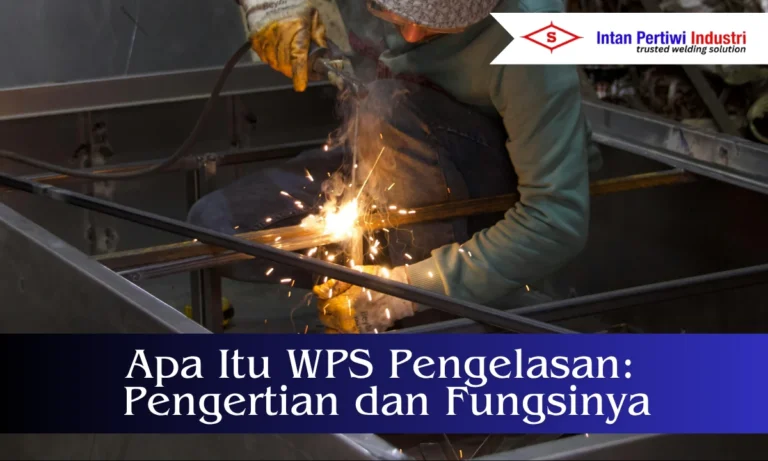
In industrial work, the Welding WPS is a crucial document to ensure the welding process is carried out in a targeted manner and according to standards. The quality of a welded joint is determined not only by the welder's skill but also by many technical factors, including the type of material, welding process, electrode used, current, voltage, welding position, and pre- and post-welding heat treatment.
To effectively manage all these factors, a clear guidance document is required. This document is known as a welding WPS.
For welders, quality assurance officers, welding inspectors, engineers, supervisors, and fabrication companies, understanding the WPS is crucial. The WPS helps ensure the welding process is carried out consistently, measurably, and meets required standards. Without clear procedures, welding results can vary, and even risk weld defects that can affect the strength of the joint.
This article will discuss what a welding WPS is, its function, the contents of the document, how to create it, and its relationship to the selection of welding wire in industrial work.
Table of Content
ToggleWhat is Welding WPS?
Welding WPS stands for Welding Procedure Specification, which is a written document containing technical guidelines on how the welding process should be carried out.
Simply put, a WPS can be understood as a "working recipe" for welding. It contains important information regarding the materials being welded, the welding process, the type of electrode or filler metal, the welding position, current and voltage parameters, preheat temperature, interpass temperature, and heat treatment requirements, if necessary.
The primary purpose of a WPS is to ensure the welding process is performed correctly and produces a weld that meets quality standards. With a WPS, welders work based on predetermined parameters rather than guesswork.
In industrial work, WPS is usually used in projects that require a high level of reliability, such as steel construction, bridges, pipes, pressure vessels, manufacturing, shipping, heavy equipment, and various other fabrication work.
WPS Welding stands for
The abbreviation for WPS welding is Welding Procedure Specification.
Loosely translated, a Welding Procedure Specification (WSP) means a welding procedure specification. This document outlines the procedures to be followed to ensure welding results meet design requirements, project standards, and quality requirements.
The term WPS is often used in conjunction with other documents such as PQR and WPQ. They are related but serve distinct purposes.
The WPS describes how welding is performed, the PQR proves that the procedure has been tested, while the WPQ shows that the welder has the ability to perform welding according to the specified procedure.
WPS Function in Welding
The WPS plays a crucial role in maintaining the quality of the welding process and results. This document is useful not only for welders but also for the QC team, welding inspectors, engineers, and project management.
Following are some of the functions of WPS in welding.
Becoming a Technical Guide for Welders
The main function of WPS is to provide technical guidance to welders before and during the welding process.
Through the WPS, welders can determine the welding process to be used, the appropriate electrode type, electrode size, current range, polarity, welding position, number of layers, welding technique, and working temperature requirements. This way, welders have a clear reference and don't work solely based on personal habits.
This guide is especially important for jobs involving multiple welders. Without a WPS, each welder could use different parameters, resulting in inconsistent weld results.
Maintaining Consistency of Welding Results
In industry, welding results must be consistent. Weld joints at one point should not have significantly different quality than joints at other points, especially if they are on the same project or structure.
WPS helps maintain this consistency. With predetermined parameters, the welding process can be repeated to the same standards.
This is especially important in production work, mass fabrication, steel construction, and projects that have strict quality requirements.
The consistency of the weld results also simplifies the inspection process because each joint can be compared against the same procedural reference.
Assisting with Quality Control and Inspection
The WPS also serves as a quality control document. The QC team or welding inspector can use the WPS as a reference when inspecting the welding process in the field.
For example, the inspector can check whether the welder is using the appropriate electrode, whether the current is within the permitted range, whether the preheat is carried out according to regulations, and whether the welding position is in accordance with procedures.
If deviations from the WPS are found, corrective action can be taken more quickly before the problem develops into a more serious weld defect.
Reducing the Risk of Welding Defects
Welding defects such as porosity, undercut, lack of fusion, cracks, slag inclusion, or incomplete penetration often occur due to improper welding parameters.
WPS helps mitigate these risks by controlling critical variables in the welding process. When electrode type, current, voltage, travel speed, preheat temperature, and welding technique are properly controlled, the likelihood of weld defects can be reduced.
However, WPS must still be supported by welder skills, good material conditions, appropriate equipment, and the right choice of welding wire.
Contents or Components in Welding WPS
The contents of a WPS can vary depending on the standard, project type, materials, and welding processes used. However, in general, a WPS usually includes the following essential components.
Welded Material Data
The WPS must list the base metal to be welded. This information can include the material type, grade, thickness, pipe diameter (if applicable), and the material group according to the applicable standard.
Material data is crucial because each material has different characteristics. Carbon steel, alloy steel, stainless steel, and cast iron require different welding approaches.
Materials with high strength or certain carbon contents, for example, may require preheating to reduce the risk of cracking.
Welding Process Used
The WPS also lists the welding process used. Some commonly used welding processes include SMAW, GMAW, GTAW, FCAW, and SAW.
For work involving manual electrode welding wire, the most common process is SMAW, or Shielded Metal Arc Welding. This process is widely used in construction, maintenance, fabrication, and repair work due to its flexibility and ability to operate in a variety of field conditions.
The selection of the welding process must be adjusted to the project needs, material type, work position, productivity, and quality standards to be achieved.
Types of Electrodes or Filler Metal
Electrodes or filler metal are a critical component of a WPS. The WPS document typically lists the electrode classification, diameter, brand or type (if applicable), and the standards to which the electrode refers.
Electrode selection should not be done haphazardly. The electrode must be suitable for the base material, welding position, required joint strength, and field conditions.
In certain applications, selecting a low hydrogen electrode is important to reduce the risk of hydrogen cracking, especially in high strength steels or jobs that require better joint resistance.
Weld Joint Position and Design
The WPS also contains information regarding welding positions, such as flat, horizontal, vertical, overhead, or specific pipe positions.
In addition, the design of the welded joint also needs to be explained, for example butt joint, fillet joint, groove angle, root gap, root face, backing, and the number of layers or passes required.
Joint design affects penetration, strength, and the final shape of the weld. Therefore, this information must be clearly written so the welder can follow the procedure correctly.
Welding Parameters
Welding parameters are a critical part of the WPS. These parameters can include current, voltage, polarity, travel speed, heat input, electrode size, swing technique, and even the number of passes.
Parameters that are too low can result in underpenetration or lack of fusion. Conversely, parameters that are too high can cause undercuts, distortion, burn-through, or undesirable changes in the material structure.
Therefore, WPS typically provides a range of allowable parameters, rather than a single fixed number. This range helps welders adjust to field conditions without exceeding the procedure's limits.
Preheat, Interpass Temperature, and PWHT
Some welding jobs require temperature control, either before, during, or after the welding process.
Preheating is the initial heating of a material before welding. Its purpose is to reduce the cooling rate, help reduce the risk of cracking, and maintain the stability of the welding process.
The interpass temperature is the temperature between passes that must be controlled when welding multiple layers. If the temperature is too high or too low, the quality of the joint can be affected.
Post Weld Heat Treatment (PWHT) is a heat treatment performed after welding. Not all jobs require PWHT, but for certain materials and applications, this process is essential to reduce residual stresses and improve joint stability.
How to Make a Welding WPS
Creating a welding WPS shouldn't be done haphazardly. This document must be compiled based on applicable standards, project requirements, material types, and test results, if necessary.
Following are the general steps in creating a WPS.
Determining the Standard or Code to Use
The first step in creating a WPS is to determine the standard or code to be used as a reference. The standards used can vary depending on the type of work, industry, and project requirements.
Some projects may reference standards such as AWS, ASME, API, ISO, or other standards specified by the project owner. The choice of standard is important because it will affect the qualification requirements for the procedure, the parameters that must be included, and the type of testing required.
Identifying Materials and Connection Types
Once the standards have been determined, the next step is to identify the materials to be welded. Information such as material type, grade, thickness, joint shape, and welding position must be known from the outset.
Different materials may require different electrode types, preheat temperatures, and welding parameters. Therefore, the material identification stage is a crucial step in developing a WPS.
Determining the Welding Process and Electrodes
The next step is to determine the welding process and electrodes to be used.
For example, for certain jobs, the SMAW process can be used with carbon steel electrodes, low hydrogen, stainless steel, or other special electrodes. The selection of electrodes must take into account the mechanical strength requirements, the type of base material, the welding position, and the operational conditions of the joint.
At this stage, understanding electrode characteristics is crucial. The right electrode will help the welding process run more stably and produce welds that better meet the job requirements.
Setting Welding Parameters
Once the process and electrode are determined, welding parameters need to be established. These parameters include current range, voltage, polarity, travel speed, welding technique, number of passes, and preheat or interpass temperature, if necessary.
Parameters must be realistic and applicable in the field. A WPS that is too ideal but difficult to implement can cause problems during production. Conversely, a WPS that is too loose can result in uncontrolled weld quality.
Perform Procedure Qualification If Required
On some jobs, the WPS needs to be supported by a PQR, or Procedure Qualification Record. The PQR contains a record of the welding procedure's testing to demonstrate that it can produce a weld that meets specifications.
Testing can include tensile, bending, impact, hardness, macro tests, or other tests according to standards and project needs.
If the test results meet the requirements, the data can be used to support the WPS. Thus, the WPS is not just a theoretical document, but a proven procedure for producing standard-compliant connections.
Documenting and Controlling WPS Revisions
Once the WPS is created, the document must be properly stored and controlled. Any changes to materials, welding processes, electrodes, parameters, or other critical variables must be evaluated.
If the changes include variables that require requalification, then the WPS should not be used immediately without an appropriate verification process.
Revision control is important so that documents used in the field are always the latest version and meet project needs.
The Difference Between WPS, PQR, and WPQ in Brief
In the welding world, the term WPS often appears alongside PQR and WPQ. The three are related but serve distinct purposes.
A WPS is a document that explains how to perform welding. It contains technical guidelines for welders, including welding processes, materials, electrodes, positions, and welding parameters.
A PQR, or Procedure Qualification Record, is a document that records the test results of a welding procedure. A PQR proves that the procedure used is capable of producing a welded joint that meets requirements.
WPQ or Welder Performance Qualification is a document that shows that a welder has the ability to perform welding according to certain procedures and standards.
In simple terms, WPS is a work guide, PQR is proof that the procedure is suitable for use, while WPQ is proof of the welder's ability.
Why does the choice of welding wire affect the WPS?
The selection of welding wire or electrode has a significant impact on the welding WPS. The electrode is a direct part of the weld joint formation process, so its characteristics will affect arc stability, penetration, weld metal deposition, joint strength, and the risk of weld defects.
In the WPS, electrodes are usually clearly listed, including their classification, size, and use. This is to ensure consistent welding quality.
For example, work on common carbon steels may require electrodes with stable arc characteristics and clean welds. For jobs requiring higher resistance, low-hydrogen electrodes can be an important choice to help reduce the risk of hydrogen cracking.
Therefore, electrode selection should not only be based on custom or stock availability, but also consider project standards, material type, welding position, and joint performance requirements.
For industrial companies, selecting the right welding wire can help support more effective WPS implementation. When procedures are correct and welding materials are appropriate, the chances of achieving strong, stable, and standardized welds are significantly improved.
Mistakes to Avoid When Using WPS
Even though WPS is available, there are still several errors that often occur in the field.
The first mistake is using the WPS merely as a formality. In fact, the WPS should be a working guideline that is actually applied throughout the welding process.
The second mistake is using electrodes or parameters that differ from the WPS specifications without technical evaluation. Small changes to the welding process can impact the quality of the final product, especially on jobs with stringent standards.
The third mistake is not ensuring the welder understands the contents of the WPS. A good document will be ineffective if it isn't understood by the people who implement it. Therefore, communication between engineers, supervisors, QC, and welders is crucial.
Another mistake is not controlling WPS revisions. If old documents are still in use while project conditions have changed, the risk of non-conformities can increase.
By avoiding these mistakes, WPS implementation can run more effectively and help maintain the quality of welding work.
Conclusion
A welding work plan (WPS) is a crucial document that serves as a technical guide for the welding process. The WPS allows for more precise control of parameters such as material type, welding process, welding position, current, voltage, electrode type, and heat treatment. This ensures consistent, safer welding results, and meets field standards.
In industrial practice, the WPS not only helps welders work according to procedures but also supports quality assurance teams, supervisors, and engineers in maintaining the quality of welded joints. Therefore, understanding the WPS is crucial in welding work, especially on projects that require strength, durability, and reliability.
In addition to proper procedures, the selection of welding materials also plays a crucial role in ensuring the quality of the weld. If you need welding electrodes suitable for industrial welding needs, PT Intan Pertiwi Industri offers KOBELCO welding electrode that can be tailored to various applications.
Need recommendations for KOBELCO welding electrode for your project, fabrication, or industrial maintenance needs? Contact PT Intan Pertiwi Industri for product information and consultation on selecting the right electrode for your welding application.

FAQs
What is WPS welding?
Welding WPS is a Welding Procedure Specification document that contains technical guidelines on how to perform welding, starting from materials, welding processes, electrodes, positions, to welding parameters.
What is the function of WPS in welding?
The function of the WPS is to be a working reference for welders, maintain the consistency of welding results, help with quality control, and reduce the risk of welding defects due to inappropriate welding parameters.
What does WPS welding stand for?
The abbreviation for WPS welding is Welding Procedure Specification.
What is the content of the welding WPS?
The contents of the WPS generally include the type of material, welding process, electrode or filler metal, joint design, welding position, current, voltage, preheat, interpass temperature, and PWHT if required.
What is the difference between WPS and PQR?
WPS is a welding procedure guide document, while PQR is a test result document that proves that the welding procedure is capable of producing joints according to requirements.
Does electrode selection affect WPS?
Yes. The electrode affects arc stability, penetration, joint strength, and the risk of weld defects. Therefore, the electrode type is usually clearly stated in the WPS.