
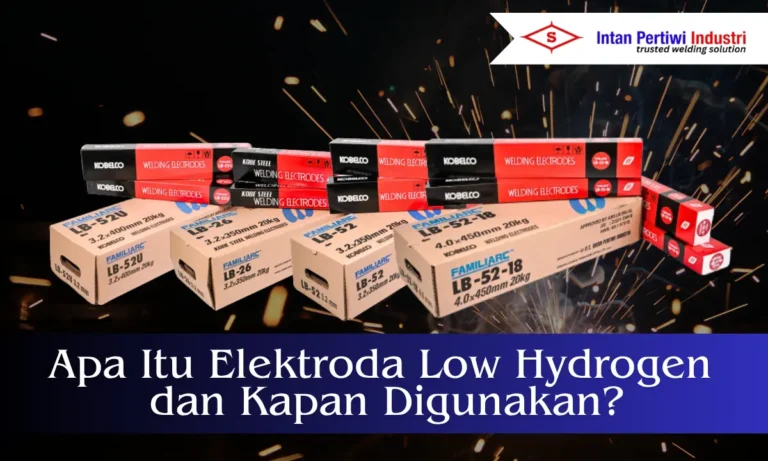
What is a low hydrogen electrode, what is its function, when is it used, and what type of KOBE welding electrode is suitable for welding heavy and industrial structures?
In the world of welding, electrode selection cannot be done carelessly because each type of welding electrode has different characteristics, functions, and areas of use.
PT Intan Pertiwi Industri as a company engaged in the field of welding products understands that industrial needs are not only limited to obtaining welding electrode, but also choosing the right electrode to produce strong, stable joints that meet work standards.
One type of electrode that is widely used in heavy structural and fabrication work is the low hydrogen electrode, namely an electrode with low hydrogen characteristics that is designed to help reduce the risk of cracking in the weld.
This article will discuss the definition, function, usage time, and types of low hydrogen electrodes so that readers can understand the right choice before determining welding electrode products for their work needs.
Table of Content
ToggleWhat is a Low Hydrogen Electrode?
A low hydrogen electrode is a type of manual arc welding or SMAW electrode designed to produce a weld deposit with a low hydrogen content.
Hydrogen in the welding process can come from moisture in the electrode coating, contamination of the material surface, oil, rust, or improper electrode storage conditions.
If hydrogen is trapped in the weld metal, especially in certain materials, the risk of cold cracking or cracking can increase.
Therefore, low-hydrogen electrodes were developed to help reduce hydrogen ingress into the weld area. This characteristic makes them widely used in applications requiring strong, stable joints with minimal risk of defects.
For typical welding jobs, rutile electrodes like E6013 may be sufficient for general welding needs. However, for more critical jobs, such as heavy structures, thick plates, higher tensile steel, or components subject to significant stress and loads, low-hydrogen electrodes are a more appropriate choice.
In general, low-hydrogen electrodes have a basic coating that helps produce weld metal with better mechanical qualities. The resulting welds tend to have good toughness, high tensile strength, and optimal crack resistance compared to conventional electrodes, as long as they are used with proper welding procedures.
However, it's important to understand that low-hydrogen electrodes also require more disciplined handling. Storage should be ensured to prevent moisture absorption.
In certain applications, electrodes may need to be dried or reheated according to technical recommendations before use. This is to maintain electrode performance and ensure welding results remain up to standard.
In other words, low hydrogen electrodes are not just welding electrodes to produce joints, but part of a welding work system that requires proper product selection, material preparation, electrode storage, welding parameters, and welder skills.
When to Use Low Hydrogen Electrodes?
Low hydrogen electrodes should be used under the following welding conditions:
- When the job has a high risk of cracking
Low hydrogen electrodes are suitable for use when the material or welding conditions have the potential to cause cracks, especially cracks due to hydrogen or hydrogen cracking. - For welding carbon steel and high-strength steel
This type of electrode is relevant for work on carbon steel, high-tensile steel, and materials that require stronger and more stable weld joints. - In welding heavy steel structures
Low hydrogen electrodes are widely used for construction projects, bridges, building frames, heavy equipment, and industrial components that receive large loads. - When welded joints must withstand static and dynamic loads
For structures subject to pressure, vibration, or repetitive loads, low hydrogen electrodes help produce more reliable joints. - For pressure vessel, boiler, tank, and industrial pipe work
These components usually work under demanding pressure, temperature, or operational environmental conditions, so they require strong and crack-resistant welds. - When welding thick plates
The thicker the material being welded, the greater the potential for residual stresses and the risk of cracking. Low hydrogen electrodes help reduce these risks when used with proper procedures. - When preheat and interpass temperature control are required
In certain jobs, low hydrogen electrodes are often combined with preheat, interpass temperature control, and appropriate welding techniques to maintain joint quality. - When consistent visual and mechanical quality is required
Low hydrogen electrodes are suitable for manufacturing and fabrication jobs that require not only neat welds but also mechanical strength. - For industrial work with high quality standards
The use of these electrodes is important for work that must follow material specifications, project standards, and certain welding procedures. - When companies need more efficient, safer, and longer-lasting welding results
With the right product selection, low hydrogen electrodes can help improve the reliability of weld joints and reduce the potential for future damage.
Types of Low Hydrogen Electrodes
In the KOBE Welding Electrode product family, there are several types of low hydrogen electrodes that have different characteristics and functions.
The selection of electrode type should not only be based on the product name, but also based on the type of material, welding position, strength requirements, and work conditions in the field.
The following are several types of low hydrogen electrodes that are commonly used in industrial welding work.
1. KOBE LB-26 Welding Electrode
KOBE LB-26 is one of the low hydrogen electrode options that can be used for carbon steel welding work and fabrication needs that require strong and stable weld results.
This electrode is suitable for use in jobs that require better joint quality than general welding, especially when the risk of cracking needs to be reduced.
In welding practice, KOBE LB-26 can be an option for fabrication, repair, and joining of steel materials that require more reliable performance.
The low hydrogen character helps produce weld deposits that are safer against potential cracking, especially if the electrode is stored and used according to procedures.
For welders, using electrodes like the LB-26 also helps maintain arc stability and weld quality when used with the correct parameters. However, as with other low-hydrogen electrodes, attention to material condition, surface cleanliness, and welding technique remains crucial.
KOBE LB-26 AWS A.51 E7016 can be considered for industrial needs that prioritize joint strength, weld resistance, and quality consistency in carbon steel work.
2. KOBE LB-52 Welding Electrode
KOBE LB-52 is known as one of the low hydrogen electrodes that is widely used for welding carbon steel and steel with higher strength requirements.
This product is often associated with structural applications, fabrication, and jobs that require strong, crack-resistant welds.
LB-52 Electrode is included in the relevant category for industrial work because it is able to provide welding results with good mechanical characteristics.
In structural work, the selection of electrodes like this is important because the welded joints must be able to withstand the working load and pressure.
KOBE LB-52 can be used for various needs, ranging from steel construction, component fabrication, industrial equipment repair, to jobs that require weld deposits with more controlled quality.
The low hydrogen character of this electrode helps reduce the potential for hydrogen cracking, especially in more sensitive materials.
In its use, the welder still needs to pay attention to welding procedures, such as appropriate current, welding position, material cleanliness, and electrode storage.
With the right procedures, LB-52 can help produce strong, neat, and more reliable weld joints for industrial needs.
3. KOBE LB-52-18 Welding Electrode
KOBE LB-52-18 is a low hydrogen iron powder electrode that is widely used for welding mild steel and high tensile strength steel class 50 kgf/mm².
The LB-52-18 product is classified as AWS A5.1 E7018 and is known as a low hydrogen electrode with good deposit efficiency.
This type of electrode is very suitable for heavy structural work, steel construction, shipping, tanks, boilers, pressure vessels, and thick plate fabrication.
With the character of E7018, LB-52-18 is designed to produce welded joints with good mechanical strength and optimal crack resistance.
One of the advantages of the E7018 electrode is its ability to produce strong and stable welds on demanding jobs. Because it contains iron powder in its coating, this electrode can also help improve welding efficiency under certain conditions.
However, LB-52-18 still requires proper handling. The low-hydrogen electrode must be protected from moisture to prevent deterioration of its performance. For certain applications, storage in an electrode oven or rebaking may be required, in accordance with technical standards and recommendations.
For industries that require high-quality and consistent welding results, KOBE LB-52-18 can be the right choice for welding jobs that demand strength, toughness, and reliability of joints.
4. KOBE LB-52U Welding Electrode
KOBE LB-52U is a low hydrogen electrode that is widely used for root pass welding work, especially in pipe applications.
This type of electrode is designed to help produce good penetration in the initial joint, making it particularly relevant for jobs requiring strong and stable root quality.
In pipe welding, the quality of the root pass is very important because this initial layer will affect the strength and quality of the overall joint.
If the root pass is not formed properly, the risk of weld defects such as lack of penetration, incomplete fusion, or cracking may increase.
The KOBE LB-52U can be an option for welders who handle pipe work, pipelines, pressure line fabrication, or other industrial work that requires better penetration control.
The low hydrogen character helps reduce the risk of cracking, while its usage character supports welding needs in more critical areas.
The selection of LB-52U should be adjusted to the welding procedure, project standards, welding position, electrode diameter, and type of material used.
With proper technique, these electrodes can help produce more stable and high-quality root passes.
Conclusion
Low hydrogen electrodes are a type of welding electrode designed to produce weld deposits with low hydrogen content, thereby helping to reduce the risk of cracking in the joint.
This type of electrode is widely used in welding carbon steel, high strength steel, thick plates, heavy structures, pressure vessels, tanks, boilers, and industrial pipes.
Products such as KOBE LB-26, KOBE LB-52, KOBE LB-52-18, and KOBE LB-52U have different usage characteristics according to welding application needs.
By selecting the right electrode, the welding results can be stronger, more stable, with minimal risk of defects, and more reliable for industrial needs.
For your needs of low hydrogen electrodes and KOBE welding electrode products, contact PT Intan Pertiwi Industri for product consultation and ordering information.
What is a low hydrogen electrode?
Low-hydrogen electrodes are welding electrodes designed to produce weld deposits with a low hydrogen content. This type of electrode is used to help reduce the risk of cracking in welds, especially on carbon steel, high-tensile steel, heavy structures, and thick plate.
What is the function of the low hydrogen electrode?
The primary function of low-hydrogen electrodes is to produce strong, stable weld joints that are more resistant to hydrogen-induced cracking. These electrodes are widely used in welding jobs that require better mechanical properties than conventional welding.
When is the low hydrogen electrode used?
Low-hydrogen electrodes are used when welding requires high joint strength, crack resistance, and consistent weld quality. Examples include steel construction, pressure vessels, boilers, tanks, pipes, heavy equipment, and thick plate fabrication.
What is the difference between a low hydrogen electrode and a regular electrode?
The main differences lie in the coating characteristics and hydrogen content of the weld deposit. Low-hydrogen electrodes are designed to reduce the risk of hydrogen-induced cracking, while conventional electrodes, such as rutile electrodes, are more commonly used for less critical general work.
What are some examples of KOBE low hydrogen electrodes?
Some examples of KOBE low hydrogen electrodes include KOBE LB-26, KOBE LB-52, KOBE LB-52-18, and KOBE LB-52U. Each type has different usage characteristics, so the selection needs to be adjusted to the material, welding position, and application needs.