
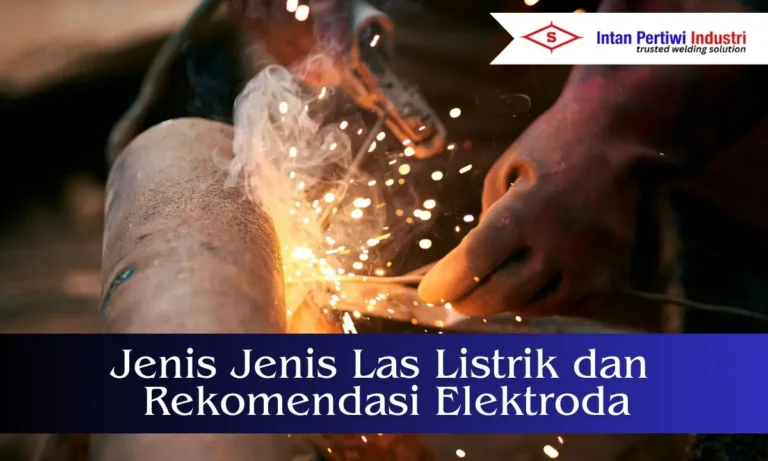
Confused about choosing a welding method? Learn the types of electric welding and how to choose electrode welding electrode according to material, position and working thickness.
In the fabrication world, "electric welding" is often referred to as a single method. In reality, there are many different processes that all use electricity as a heat source. The differences go beyond names; they directly impact the joint results, production costs, work speed, and even the risk of weld defects.
As a technical illustration that often opens discussions in workshops: the core temperature of an electric arc can be in the range of 6,000°C, while steel generally begins to melt at around 1,370–1,540°C.
That is the reason why electric welding processes are very effective for joining metals, but also “sensitive”: different methods, different arc characteristics, different protection of the molten metal, and different requirements for welding wire or consumables.
This article discusses the types of electric welding practically for field and industrial needs: a brief definition of each process, when to use it, what are the pros and cons, and how to choose the right welding wire for the job so that the results are strong, neat, and require minimal rework.
Table of Content
ToggleTypes of Electric Welding
When people search for types of electric welding, what they are usually looking for is not a long theory, but a clear map: what processes are included in electric welding and what are the differences.
In general, the large groups can be divided into: arc welding, resistance welding, plasma welding, and stud welding.
1. Electric Arc Welding
Arc welding is a group of processes that utilize an electric arc between an electrode and the workpiece to melt the base metal and (if used) filler metal. It is most commonly found in workshops, construction projects, and factories.
SMAW / Electrode Welding (Stick Welding)
SMAW (Shielded Metal Arc Welding) is a welding process using a flux-coated electrode. The flux-coated electrode produces shielding gas and slag as it melts, protecting the weld pool from the air.
When does SMAW make the most sense:
Field work, repairs, maintenance, and construction projects.
Work areas that are not ideal for shielding gas (wind, outdoor).
Common materials include carbon steel, certain alloy steels, and some specialty electrodes for cast iron or hardfacing.
Advantages of SMAW:
The machine is relatively simple, high mobility.
Flexible for many positions and field conditions.
The variety of electrodes is very wide (for mild steel, low hydrogen, stainless, cast iron, hardfacing).
Limitations of SMAW:
There is slag to be cleaned, working time is longer.
Productivity per hour is usually below MIG/FCAW.
Quality is highly dependent on operator skill, electrode selection, and heat control.
Practical note: SMAW is often chosen because it is “most reliable” in the field, but to be efficient, the electrode diameter and current setting must be chosen correctly to avoid excessive sticking or spatter.
GMAW / MIG-MAG
GMAW (Gas Metal Arc Welding) uses a coil of welding wire that comes out automatically through the torch.
The weld pool protection comes from shielding gas. In the field, people often call it MIG, but the more correct term is:
MIG: uses inert gas (e.g. argon) for certain materials.
MAG: using active gas (e.g. CO₂ or a mixture) which is common for carbon steel.
When is MIG-MAG best suited:
Fabrication production that pursues speed and consistency.
Frame work, brackets, frames, and repetitive components.
When you want neat results with minimal cleaning (without slag like SMAW).
MIG-MAG advantages:
High deposition speed, suitable for production.
Easy to standardize (setting wire speed, voltage, gas flow).
The results are neat and relatively easy for trained operators.
Limitations of MIG-MAG:
More wind sensitive (shielding gas can be disturbed).
It requires proper settings to avoid porosity, spatter, or lack of fusion.
Requires gas supply and liner/drive roll maintenance.
In industry, MIG-MAG is often the backbone because it is stable for production, especially if SOPs and parameters are kept consistent.
GTAW / TIG (Argon Welding)
GTAW (Gas Tungsten Arc Welding) or TIG uses a tungsten electrode (non-consumable) and a shielding gas (usually argon). Filler metal can be added separately if needed.
When TIG is selected:
Connections that demand high cleanliness and control.
Stainless steel, aluminum, or materials that are sensitive to contamination.
Certain root passes that require weld pool penetration and control.
TIG advantages:
The results are very neat and precise.
Good heat control, suitable for thin materials and detail work.
Minimal spatter.
TIG limitations:
Slower than MIG/FCAW.
It requires high hygiene skills and discipline.
Labor costs can be more expensive if the target is fast production.
TIG is not “superior to all processes,” but it excels when visual quality, control, and cleanliness of the joint are key requirements.
FCAW (Flux-Cored Arc Welding)
FCAW (Flux-Cored Arc Welding) uses flux core wire. There are two main variants:
FCAW-G: uses additional shielding gas.
FCAW-S: self-shielded (without gas), protection comes from the flux.
When FCAW is widely used:
Steel structures, shipyard, heavy fabrication, and thick work.
High deposition requirements and productivity.
Certain field conditions (FCAW-S can help when gas is scarce).
Advantages of FCAW:
High deposition, good productivity.
Penetration and performance on thick materials are generally good.
More “condition resistant” than MIG in some situations.
FCAW Limitations:
There is slag (similar to SMAW) on many types of flux-cored wire.
Welding fumes and spatter can be higher depending on wire type and settings.
Parameter discipline is needed to get consistent results.
If the target is high output but still wants stability, FCAW is often a logical choice in heavy industry.
SAW (Submerged Arc Welding)
SAW (Submerged Arc Welding) is an arc welding process that is "submerged" under flux powder. The arc is not directly visible because it is covered by the flux, resulting in very high deposition rates and consistent quality for certain applications.
When is SAW used:
Large-scale industrial production: pipes, pressure vessels, girders, H-beams.
Long seams and repetitive work.
When the target is high productivity and consistency.
Advantages of SAW:
Very high deposition, suitable for long weld lines.
Excellent flux protection, stable results.
High efficiency for production.
Limitations of SAW:
Generally confined to a specific position (often flat or on a rotator system).
The equipment setup is larger and less flexible for the field.
Not practical for small jobs or multiple positions.
SAW is a “production weapon” in a factory environment, not for all-round work like SMAW.
2. Resistance Welding
Resistance welding utilizes heat from electrical resistance at the point of contact, plus pressure from the electrode.
Unlike arc welding, this process doesn't rely on an open arc. It's widely used in the manufacturing industry, especially for thin plates and mass production.
Spot Welding
Spot welding joins materials with a welding “point” using two electrodes that press against the metal sheet, then a large current is passed for a short time.
Commonly used for:
Automotive bodies, panels, cabinets, sheet metal components.
Excess:
Very fast for production.
No need for filler wire in many applications.
Consistent when parameters and pressure are stable.
Limitations:
Limited to certain thicknesses and joint designs.
Access from both sides for electrodes is required in many cases.
Seam Welding
Seam welding is a development of spot welding, using a rotating electrode wheel to produce a continuous joint “path”.
Commonly used for:
Thin tanks, drums, sheet metal products that require long, tight connections.
Excess:
Continuous, productive connection path.
Suitable for repetitive production.
Limitations:
Specific machine setup.
Not flexible for complex joint shapes.
Projection Welding
Projection welding uses projections on a component to concentrate heat at a specific point, for example for welding nuts, bolts, or small studs to a plate.
Excess:
The welding point is more controlled at the desired location.
Suitable for fastener components on sheet metal.
Limitations:
Requires proper projection design.
Quality control is greatly influenced by pressure, current, and surface conditions.
3. Plasma Welding (PAW – Plasma Arc Welding)
PAW (Plasma Arc Welding) is a derivative of TIG, but the arc is “concentrated” through a nozzle so that it becomes a more focused and stable plasma for certain applications.
When is PAW relevant:
Industrial precision work, special components, and the need for arc consistency in certain settings.
Applications that require higher control than conventional TIG under certain conditions.
Excess:
The bow is stable and focused.
Good control for some precision applications.
Limitations:
The equipment is more complex and the investment costs are higher.
Tidak selalu diperlukan untuk pekerjaan bengkel umum.
4. Stud Welding
Stud Welding is the process of connecting studs/bolts to plates using electrical energy, generally very fast and efficient for certain construction or fabrication applications.
When to use:
Stud installation on structures, decks, panels, or components that require multiple stud points.
Excess:
Fast, productive, and consistent for bulk jobs.
Reduces the need for drilling and mechanical installation.
Limitations:
Requires special equipment and suitable studs.
Surface conditions and parameters greatly influence the results.
How to Choose Welding Electrode According to the Job
Understanding the different types of electric welding isn't enough. In the field, selecting the right consumables often determines the outcome.
Here is a practical guide to choosing welding wire or electrodes according to your work needs.
Determine the basic materials and their requirements
Low carbon steel (mild steel): generally the most flexible, most electrode choices.
High strength steel or critical structures: often require low hydrogen electrodes and tighter procedural controls.
Stainless steel: requires filler of the appropriate grade to maintain corrosion properties and strength.
Cast iron: requires special electrodes (e.g. nickel-based) and heat/cooling control.
Know the welding position and field conditions
Windy Outdoors: SMAW or FCAW-S is often safer than MIG/TIG because the shielding gas is easily disturbed.
Multiple positions (vertical/overhead): choose electrodes or wires that are designed for all positions and adjust the parameters.
Adjust the material thickness to the process and consumable diameter.
Thin materials require good heat control to prevent burn-through. TIG or MIG with the right settings usually works best.
Thick materials: consider high deposition (FCAW/SAW) or SMAW with proper multi-pass procedures.
Determine the target result: fast or super neat
Fast production targets: MIG-MAG or FCAW are usually effective.
Neat and precise visual targets: TIG excels.
All-round target in the field: SMAW is often the first choice.
Pay attention to quality and inspection requirements
If the connection is in a critical area (certain structures, pressure vessels, or strict QC standards), electrode selection, procedures, consumable storage, and parameter discipline become more important than “just being able to stick”.
Recommended Electrode Welding Electrode for Electric Welding
This section focuses on the most common needs in the field: SMAW type electric welding (electrode welding).
Here are some recommendations for electrode welding wire for electric welding, namely:
1. RB-26 KOBE Welding Electrode (AWS A5.1 E6013)
FAMILIARC RB-26 welding electrode is a safe choice for everyday work in workshops and carbon steel fabrication. It is easy to ignite, slag is easy to peel, and the resulting bead tends to be neat, making it suitable for beginners to intermediate operators.
The RB-26 is also flexible, as it can be used with both AC and DC motors. Available sizes range from 2.0 mm to 5.0 mm, making it easy to adjust to material thickness and work requirements.
When to choose:
Fences, frames, brackets, canopies, light construction work
Mild steel material and multipurpose work when you need neat and fast results
2. KOBELCO MS-77 Welding Electrode (AWS A5.1 E6013)
MS-77 welding electrode is the same as E6013, but is often chosen when you want a stable arc feel and comfortable bead control for routine work.
This product is intended for mild steel (low-medium carbon steel) in sizes of 2.6 mm, 3.2 mm, and 4.0 mm. It is suitable for daily fabrication that requires consistency, especially in small-to-medium production.
When to choose:
Brackets, lightweight panels, repetitive mild steel fabrication
When the operator prioritizes arc stability and smooth bead results
3. B-17 KOBE STEEL Welding Electrode (AWS A5.1 E6019)
B-17 welding electrode is an electrode for carbon steel with the E6019 classification. On the product page, B-17 is stated to be suitable for welding plates up to about 25 mm and is available in sizes 2.6 mm, 3.2 mm, 4.0 mm.
This is relevant for work that leads to thicker materials or the need for more “filled” deposits in certain construction and fabrication applications, while still maintaining the flexibility of AC/DCEP/DCEN polarity.
When to choose:
Fabrication of mild–medium carbon steel, including when the working thickness tends to be greater
When stable performance is needed for general construction/fabrication work.
4. LB-52 KOBE STEEL Welding Electrode (AWS A5.1 E7016)
KOBE LB-52 welding electrode is an E7016 low hydrogen electrode intended for joints that require better toughness and helps reduce the risk of hydrogen cracking under certain conditions.
The arc character is smooth and spatter is relatively minimal, and the slag is easily removed, thus supporting consistent multi-pass work.
When to choose:
Structures, more serious fabrication (not just light work)
Connections with higher restraints or when following WPS requirements that lead to low hydrogen
5. LB-52-18 KOBE STEEL Welding Electrode (AWS A5.1 E7018)
KOBE LB-52-18 welding electrode is a low hydrogen electrode type E7018 for carbon steel and high tensile steel (up to class around 490 MPa in the category/product description).
Generally E7018 is used when higher mechanical properties and a more disciplined procedural approach (cleanliness, heat control, and storage) are required.
When to choose:
Construction and fabrication that require higher connection strengths
Applications leading to the working standard/WPS requiring E7018
6. LB-52U KOBE STEEL Welding Electrode (AWS A5.1 E7016)
KOBE LB-52U welding Electrode is described as a low hydrogen electrode specifically designed for root pass work on carbon steel pipes and structures in all directions, with deep penetration and a smooth and consistent root bead.
This is especially relevant for pipeline work (especially when access is restricted) and applications that demand neat root control.
When to choose:
Root pass pipe, pipe connection with limited access
Oil & gas/petrochemical or pipe fabrication jobs requiring consistent root results
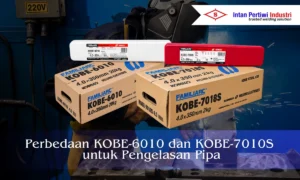
7. KOBE-6010 dan KOBE-7010S
On the “Our Products” page, INTIWI also lists KOBE-6010 and KOBE-7010S as part of the SMAW electrode family for mild steel & high tensile steel.
If you are working on a job that requires specific characteristics according to the electrode class, these two series may be relevant options to discuss based on WPS requirements and connection type.
When to consider:
When the WPS/job requires a specific electrode class and you need an option other than E6013/E7016/E7018
In addition to the list of recommended electric welding electrodes above, intanpertiwi.co.id also provides various other types of electric welding electrodes for more specific needs, ranging from daily fabrication work, construction, maintenance, to certain industrial applications.
With a variety of types and specifications to choose from, you can use them as a consideration in adjusting the electrode to the material, welding position, thickness, and target joint quality required in the field.
Conclusion
The various types of electric welding actually reveal one important message: electric welding is not a single method.
There is arc welding (SMAW, MIG-MAG, TIG, FCAW, SAW) which is common in workshops and industry, there is resistance welding (spot, seam, projection) for sheet metal production, there is plasma for specific applications, and there is stud welding for fast stud installation.
Choosing the right process will be more effective if followed by choosing the right welding wire or electrode for the job.
With the right combination of processes, the right consumables, and disciplined parameters, the weld results can be stronger, neater, and require minimal re-repair.
Intanpertiwi.co.id serves KOBELCO electrode needs for workshops, fabrication, and industry, with product availability support and consultation on selecting electrode types according to your material and work application.
To order electric welding electrode, you can directly contact and order via the page contact us.
FAQs About Electric Welding Types
1. What are the most commonly used types of electric welding?
The most common types of electric welding are divided into 4 groups: electric arc welding such as SMAW, MIG-MAG, TIG, FCAW, SAW; electric resistance welding such as spot, seam, projection; plasma welding (PAW); and stud welding for fast bolt/stud installation.
2. What are the differences between SMAW, MIG-MAG, and TIG in practice?
SMAW uses fluxed electrodes and is suitable for field work because it is relatively wind-resistant, but there is slag that must be cleaned. MIG-MAG uses coiled wire and shielding gas, making it faster and neater for production, but is sensitive to wind. TIG uses tungsten and argon gas, making it more precise and neat, but is slower and requires more skill.
3. When should you choose resistance welding such as spot or seam welding?
Resistance welding, such as spot or seam welding, is best suited for sheet metal (thin plate) production that requires speed and consistency, such as automotive panels, cabinets, or thin tanks. This process relies on electrical resistance and pressure, rather than an open arc like arc welding.
4. How to choose the right electrode welding wire for electric welding?
Choose your welding electrode wire based on four factors: material (mild steel, stainless steel, cast iron), welding position (flat, vertical, overhead), material thickness, and quality goals (fast production or critical joints). If the job requires toughness and a lower risk of cracking, consider a low-hydrogen electrode such as E7016/E7018; for everyday mild steel work, E6013 electrodes are generally more practical.
5. What electrodes are suitable for mild steel daily work in the workshop?
For everyday mild steel applications, E6013 electrodes are typically the most practical due to their ease of ignition and the resulting beads tend to be neat. At INTIWI, common examples for this purpose are RB-26 and MS-77 (both E6013 grade), which are suitable for general fabrication such as frames, brackets, and light construction work.