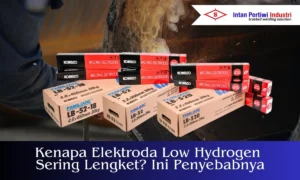

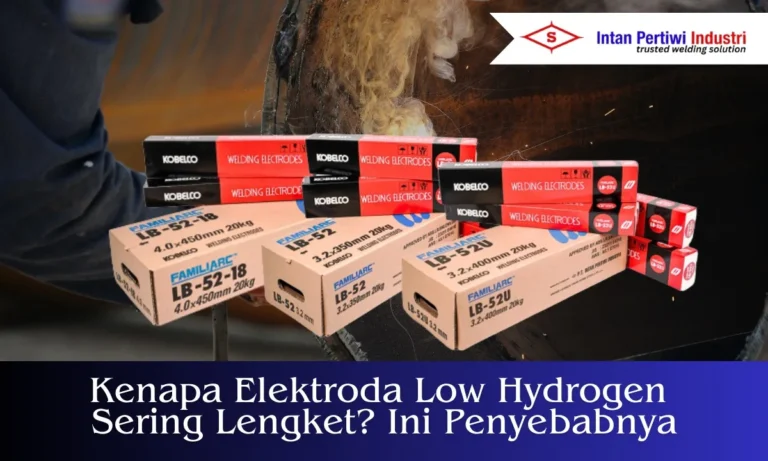
Why low hydrogen electrodes often stick is a question that often arises when the welding process does not run smoothly, especially when the electrode sticks to the workpiece during initial ignition.
This condition is quite common because low hydrogen electrodes are used for jobs that require high weld quality, especially on carbon steel, medium tensile steel, and structural applications.
Low hydrogen electrodes are known as one type of electrode welding wire which is widely used for jobs that require high quality weld joints, especially on carbon steel, medium tensile steel, and structural applications.
Compared to other electrodes, this type has advantages in terms of welding strength, mechanical stability, and better control of hydrogen content.
Products such as LB-52 welding electrode for example, include low hydrogen electrodes class AWS A5.1 E7016 which are used for carbon steel and medium tensile steel, and can be used on AC and DC+ currents.
However, in the field, many welders still complain about the same thing: low-hydrogen electrodes tend to stick more easily, especially during arc ignition. This problem is actually quite common and doesn't necessarily indicate a faulty product.
In many cases, the cause actually comes from a combination of amperage settings, strike technique, electrode condition, polarity, and even the cleanliness of the workpiece surface.
The same thing is also relevant when using LB-52-18 electrode, namely the low hydrogen electrode type E7018 for carbon steel and high tensile steel with smooth and stable weld characteristics.
Table of Contents
ToggleReasons Why Low Hydrogen Electrodes Often Stick
1. Ampere Too Low
One of the most common reasons why low-hydrogen electrodes often stick is because the amperage used is too low. When the current is insufficient, the electrode tip will have difficulty forming a stable arc from the start.
As a result, the electrode does not immediately produce sufficient heat at the welding point, but instead sticks to the surface of the workpiece.
This condition often occurs when the operator has not adjusted the amperage to the electrode diameter or tries to use a current setting that is too low to feel safer.
In low hydrogen electrodes such as LB-52 E7016, the current requirements generally need to be paid more attention than in rutile electrodes.
If the current is too small, not only will the electrode stick more easily, but the initial start will also feel heavy, the arc will be less stable, and the weld will look less unified.
Therefore, adjusting the amperage is a very important first step before concluding that the electrode is difficult to use.
2. Incorrect Arc Lighting Technique
The technique of lighting the arc or striking also determines whether the low hydrogen electrode will be comfortable to use or will often stick.
Many operators who are accustomed to using rutile electrodes find low hydrogen more difficult to ignite, even though the problem often lies in the incorrect starting method.
When the electrode is pressed too hard, moved too slowly, or left in one spot for too long, the arc does not have time to form properly and the electrode tip sticks directly to the material.
Therefore, low hydrogen electrodes require a more confident, light, and fast initial movement.
After contacting the workpiece, the electrode must be quickly raised to the appropriate arc distance to allow for steady heat buildup. If the striking technique is inconsistent, sticking will occur more frequently, especially at the beginning of the weld.
In practice, good starting technique not only helps prevent electrode sticking, but also makes the welding process feel smoother and more controlled.
3. The bow length is too short at the start.
The bow length being too short at the start is also a very common cause.
When the electrode tip presses too much against the material surface without providing enough space for the arc to form, the heat does not develop steadily.
What happens is prolonged direct contact between the electrode and the workpiece, so that the electrode sticks before welding can proceed normally.
In low-hydrogen welding, arc length control is crucial. An arc that's too short can cause sticking, while an arc that's too long can result in an unstable weld.
Therefore, welders need to keep the arc distance short but controlled. This habit is crucial because it directly affects arc stability, weld bead shape, and comfort during the welding process.
4. The electrode is already damp
Moist electrodes also significantly impact low-hydrogen performance during use. This type of electrode is designed to maintain low hydrogen levels, making storage a critical factor.
If the flux absorbs moisture from the air due to prolonged open packaging or improper storage, ignition performance can be reduced. The arc becomes more difficult to stabilize, starting becomes difficult, and the electrode is more likely to stick at the start of welding.
Besides causing the electrode to stick more easily, humidity can also affect the overall quality of the weld.
Weld deposits can become less clean, the risk of defects such as porosity can increase, and the mechanical properties of the joint can also be compromised. That's why low-hydrogen electrodes should be stored in a dry, closed location, or according to proper storage procedures.
For the Intan Pertiwi product line, the LB-52U even includes a note to re-dry before use, which shows the importance of humidity control on low hydrogen electrodes.
5. Incorrect polarity or machine settings
The next cause is the polarity or welding machine settings that are not suitable for the characteristics of the low hydrogen electrode.
Not all sticking problems stem from the operator's hand technique. In many cases, improperly adjusted welding machines also cause the electrode to feel heavy during startup.
If the polarity does not match the electrode recommendations, or the engine output characteristics do not support initial ignition, the arc will be more difficult to form and the electrode will stick more easily.
Besides polarity, other settings such as amperage, current output stability, and machine characteristics can also affect welding comfort.
Therefore, operators should not only focus on technique, but also ensure that the machine settings are aligned with the electrode type, diameter, welding position, and material being worked on.
On its product page, the LB-52 is described as being able to work with both AC and DC+, so this kind of information is important to help operators match the machine to the product they are using.
6. Dirty Workpiece Surface
A dirty workpiece surface is often an underestimated cause, even though it greatly affects the stability of the arc at the start of welding.
Rust, paint, oil, scale, dust, or other contaminants can interfere with the initial contact between the electrode and the material. As a result, the arc doesn't form cleanly and stably, making it easier for the electrode to stick when touched to the weld area.
This condition is increasingly felt in low hydrogen electrodes which are more sensitive to surface cleanliness.
Cleaning the work area before starting to weld is a simple but crucial step. A clean surface helps the arc ignite faster and reduces starting resistance.
In addition to preventing electrode sticking, a clean workpiece also helps produce better penetration, easier slag removal, and a neater weld bead appearance.
So, if the low hydrogen electrode often sticks, don't just check the machine and current, but also check the surface condition of the material to be welded.
7. Electrode Diameter Does Not Match Ampere
The electrode diameter that does not match the amperage is also the reason why low hydrogen electrodes often stick.
For example, if an operator uses a 3.2 mm diameter electrode but the current is too low, the electrode will be difficult to ignite because the required heat isn't reached quickly enough.
As a result, when the electrode is touched to the workpiece, it sticks instead of immediately forming a stable arc.
Each electrode diameter has a different operating current requirement. The larger the electrode diameter, the greater the current generally required to maintain optimal arc performance.
If the combination of diameter and amperage is not balanced, the welding process will be less comfortable and the results will tend to be less than optimal.
Therefore, it is important to always adjust the electrode size to the machine capacity, type of work, and recommended current range so that the low hydrogen does not easily stick when used.
If you need a low hydrogen electrode for structural or high tensile steel applications, looking at the specifications for the LB-52 and LB-52-18 could be a good starting point.
Conclusion
Low-hydrogen electrodes often stick for a reason. In many cases, the cause is a combination of too low amperage, improper arc ignition technique, too short an arc length, damp electrode conditions, inappropriate machine settings, dirty workpiece surfaces, and electrode diameters that are out of proportion to the current.
Because low hydrogen electrodes are more sensitive than rutile electrodes, users need to be more careful in adjusting the technique, storage, and welding parameters so that the arc remains stable and the welding results are maximized.
By understanding these causes, welders can not only reduce the risk of electrode sticking, but also improve joint quality, work comfort, and welding process efficiency.
Proper electrode selection is also very important, especially for structural, fabrication, and medium to high tensile steel applications that require stable and reliable welding performance.
Need the Right Low Hydrogen Electrode?
If you are looking for quality low hydrogen electrodes for fabrication, construction, or other welding work, you can contact us through the intanpertiwi.co.id team.
We are ready to help you get the product that suits your application needs, material specifications, and welding job characteristics.
Please contact the intanpertiwi.co.id team for product information, consultations, and orders.
FAQs
Are low hydrogen electrodes really more sticky than regular electrodes?
In practice, yes, low-hydrogen electrodes often feel more sensitive to starting than rutile electrodes like E6013. This isn't simply because the product is more difficult to manufacture, but because these electrodes require a more precise combination of amperage, proper striking technique, dry electrode conditions, and appropriate engine settings.
Can a damp electrode make low hydrogen more difficult to ignite?
Yes. Low-hydrogen electrodes that absorb moisture tend to experience reduced performance during initial ignition. The arc can feel less stable, starting becomes more difficult, and the risk of electrode sticking increases. Therefore, storing electrodes in dry conditions is crucial for maintaining welding performance.
Which is suitable for low hydrogen needs, LB-52 or LB-52-18?
Both are equally relevant, but their use can be adjusted to suit your needs. LB-52 is a low hydrogen electrode E7016 for carbon steel and medium tensile steel, while LB-52-18 is an electrode E7018 for carbon steel and high tensile steel with smooth and stable weld characteristics. Choosing one of the two should be adjusted to the material specifications, joint strength requirements, and the character of your welding work.