
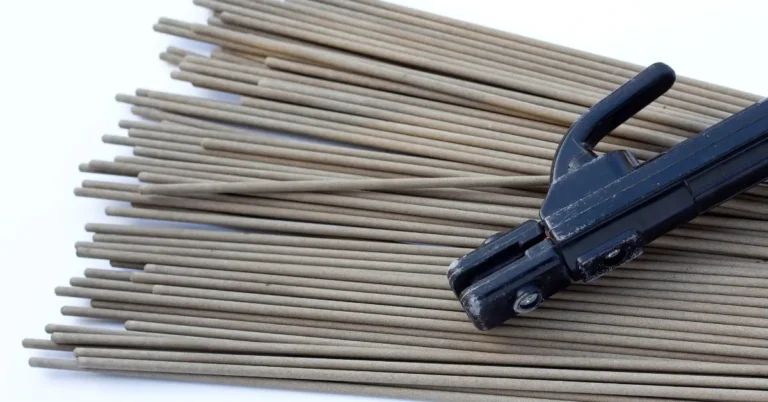
SMAW welding electrode (stick/electrode) is one of the most common types of welding electrode used in workshops and field projects because it is flexible for various welding positions. Before choosing the right electrode, first understand the material, thickness, work position, and project standards used. Use welding electrode types & sizes guide as a starting point, then we will discuss the definition, electrode types, current recommendations, and the most common SMAW applications.
SMAW welding electrode is an electrode welding electrode used in the Shielded Metal Arc Welding process to practically join steel in workshops and in the field.
This article summarizes what SMAW is, electrode types, current and diameter, positions, parameters, and the most frequently encountered troubleshooting.
What is SMAW Welding Electrode?
Definition & Working Principles
SMAW is an electric arc welding process using a flux-coated electrode. As the arc ignites, the flux decomposes, producing a shielding gas that seals the weld pool.
The remaining flux forms a slag that covers the weld metal until it cools. This shielding gas and slag prevent contamination from the surrounding air.
Advantages vs. Limitations
Excess
Simple, portable equipment for field work and repairs.
Electrodes are widely available and readily available.
Tolerant of imperfect surfaces if properly prepared.
Limitations
Deposit speed is lower than MIG or FCAW.
Requires slag stripping on each pass.
Spatter can be more if the parameters are not right.
Electrode Welding Wire
In the context of SMAW, the most appropriate term is stick electrode, not coiled wire like MIG/FCAW. However, in the Indonesian field, many people still call it “welding wire” because they both function as filler material when welding.
In short:
SMAW = flux-coated stick electrode
MIG/FCAW = wire spool
TIG = filler rod (plain rod) separated from tungsten
The purpose of clarifying these terms is not about “right or wrong”, but so that readers do not buy the wrong product or set the wrong machine.
SMAW Welding Electrode Types
| Kode | Layer | Position | Tensile strength MPa | General application |
|---|---|---|---|---|
| E6010 | Cellulose | All positions | ± 430 to 480 | Pipe root, field connection, deep penetration |
| E6011 | Cellulose | All positions | ± 430 to 480 | E6010 alternative on AC power |
| E6012 | Rutile | Flat dan horizontal | ± 430 to 480 | Thin plate, medium gap filling |
| E6013 | Rutile | All positions | ± 430 to 480 | All purpose, thin plate, smooth finish |
| E6014 | Rutile high iron powder | Flat dan horizontal | ± 430 to 480 | Faster charging in flat position |
| E7016 | Basic low hydrogen | All positions | ± 490 to 540 | Structure, medium carbon steel, HAZ sensitive |
| E7018 | Basic low hydrogen | All positions | ± 490 to 540 | Critical structure, high toughness and strength |
Quick note
- Rutile emphasizes ease of ignition and a neat bead appearance.
- Cellulose excels at root penetration and speed.
- Basic low hydrogen was chosen for the structure because of its hydrogen cracking resistance.
Use special electrodes when welding stainless steel, such as E308L-16, E309L-16, or E316L-16; for a complete guide to choosing one, see stainless steel welding electrode.
SMAW Welding Electrode Current & Diameter
The following practical guidelines are general in nature. Always check the manufacturer's recommendations and perform a small test run.
| Electrode diameter | Common plate thicknesses | Current range A | Position note |
|---|---|---|---|
| 2.0 mm | 0.8 to 2.0 mm | 30 to 60 | Suitable for thin sheets, use short stringers |
| 2.6 mm | 2 to 4 mm | 60 to 90 | All positions, control the heat to prevent burn through |
| 3.2 mm | 3 to 8 mm | 90 to 130 | Versatile for general fabrication |
| 4.0 mm | 6 mm and above | 130 to 180 | Prioritize flat and horizontal positions |
Tips for Safe Settings
Keep the arc length approximately equal to the electrode core diameter. Too long an arc increases spatter and porosity.
Adjust the travel speed so that the beads are full without dripping.
The electrode angle is about 10 to 15 degrees to the direction of travel for fillets, and perpendicular for thin roots.
SMAW Welding Positions & Motion Techniques
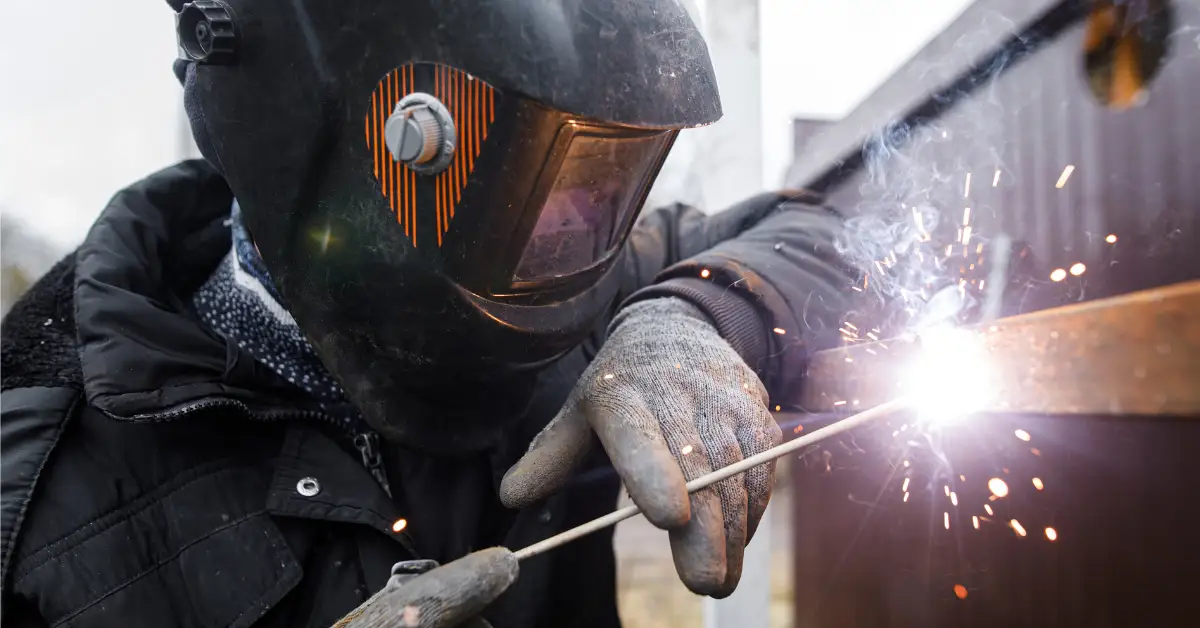
Flat and Horizontal
For flat fillets, use the stringer technique for stable penetration. If the gap is wide, you can use a short weave as long as the dwell time is not too long.
Vertical Up vs Vertical Down
Vertical up provides better pond filling and control for the structure. Use a slightly lower current and a small triangle weave technique.
Vertical down is suitable for thin roots and thin-walled pipes. It requires high-speed control and a cellulose electrode such as the KOBE 6010.
Overhead
Prioritize short stringers, moderate currents, and pauses between runs to cool the pool. Avoid wide weaves that drip easily.
Troubleshooting SMAW
Porosity
- Causes dirty surface, moisture on the electrode, arc too long, speed too high.
- Solution clean the material, shorten the arc, reduce the speed slightly, and use a dry electrode especially for E7016 and E7018.
Undercut and Overlap
- Cause current too high, wrong angle, or travel too fast or too slow.
- Solution lower the current, correct the angle by 10 to 15 degrees, choose the stringer technique.
Slag Inclusion
- Cause slag is not cleaned thoroughly or the weave pattern covers the slag.
- Solution clean thoroughly, use a graduated stringer, and control the sequence of passes.
Electrode Selection Based on Case
Thin Plate 0.8 to 3 mm
Use E6013, which is flammable and doesn't get too hot. Recommendations: RB 26 or MS 77.
Structure and Beam
Choose low hydrogen to resist hydrogen cracking and provide toughness. Recommendations: LB 26 E7016, LB 52 18 E7018, LB 52U E7016.
Pipeline Root and Hot Pass
Root use KOBE 6010 or KOBE 7010S for penetration and speed. Hot pass and fill cap continue with E7018 like LB 52 18.
Electrode Care & Storage
Oven & Canister
Elektroda basic seperti E7016 dan E7018 harus kering. Praktik umum di bengkel adalah pengeringan ulang sekitar 300 sampai 350 derajat Celsius selama satu sampai dua jam lalu penyimpanan panas sekitar 100 sampai 150 derajat Celsius. Saat dibawa ke lapangan, gunakan canister hangat supaya kelembapan tidak cepat masuk.
Impact of Humidity
A moist electrode releases hydrogen into the weld pool. This results in porosity and the risk of hydrogen cracking, especially in thick joints or high-strength materials. Keep the carton tightly closed, open only when necessary, and mark the opening time for proper rotation.
Practical Examples and Mini Case Studies
Practical example
Fabricate a fence with 3 mm plate. Choose RB 26 with a diameter of 2.6 mm with a current of 70 to 80 A. Make a short stringer in a horizontal position, clean the slag, then cap pass thinly for a neat appearance.
Practical example
Saddle repair on thin pipe. Root used KOBE 6010 3.2 mm at 90 A vertical down for speed and penetration. Further hot pass LB 52 18 3.2 mm 110 A vertical up. Visual inspection results showed a full bead with no porosity.
Mini case study
A light structure workshop complained about undercuts in WF beams. After an audit, excessive current was found in E7018 and wide weave in the vertical position.
The change to narrow stringers with a current drop of about 10 percent, as well as the addition of a holding oven at 120 degrees Celsius to keep the electrodes dry, reduced rework to below five percent in two weeks.
Conclusion
SMAW remains a versatile process for workshops and field projects. The keys to success are selecting the right electrode, using the correct current and diameter, using the correct positioning technique, and diligent electrode maintenance.
If you need SMAW welding electrode or KOBELCO electrode welding electrode with ready-to-ship stock and technical support to determine the most suitable type/size, order directly through the website intanpertiwi.co.id or contact our team for a consultation on your project specifications.

FAQs SMAW Welding Electrode
What is SMAW welding electrode?
Flux coated electrodes produce shielding gas and slag when the arc is working so that the weld metal is protected from the air.
SMAW electrode types E6010 E6013 E7016 E7018?
E6010 cellulose for root, E6013 rutile for ease, E7016 and E7018 basic low hydrogen for structure.
What is the current for E6013 diameter 2.6 mm?
Generally 60 to 90 A depending on position and seam. Start in the middle of the range and adjust the bead appearance.
Vertical up vs vertical down when to use?
Vertical up is for structures because it improves pond filling and control. Vertical down is for thin roots and speed in thin-walled pipes.
How to overcome SMAW porosity and undercut?
Clean the material, keep the electrode dry, shorten the arc, correct the current and angle, and use a stringer.
Is E7016 welding electrode the most suitable for all structures?
E7016 is excellent for structural applications, but some projects require E7018 due to its higher toughness. Evaluate WPS, thickness, and inspection requirements before selecting.