
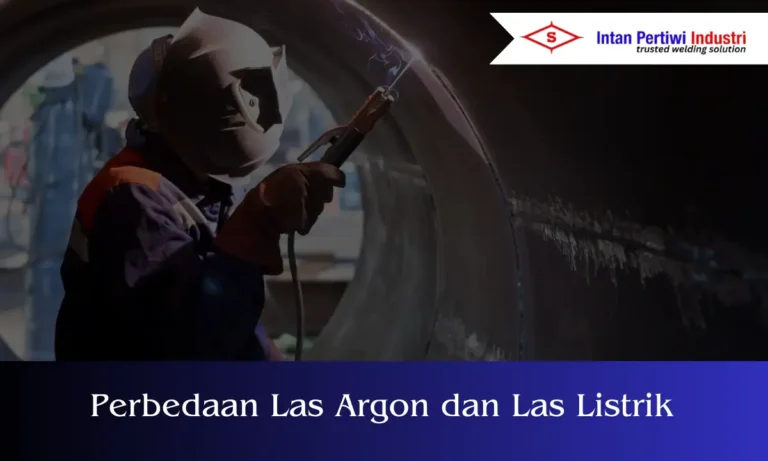
The difference between argon welding and electric welding is often the first question asked before starting to weld, because both produce joints that feel "in a different class" in terms of neatness, heat control, and even labor costs.
In this article, you'll see a clear and practical comparison so you can choose the most suitable method based on your material, thickness, and desired finish.
Table of Contents
ToggleIntroduction
The difference between argon welding and electric welding is often a major topic for beginners to welding practitioners who want to determine the most appropriate method for their work.
The choice of welding process not only affects the appearance of the joint, but also the strength, risk of defects, cost efficiency, and ease of workmanship.
By understanding the characteristics of each method, users can adjust the welding technique to the type of material, thickness, and quality requirements of the work.
Understanding Argon Welding and Electric Welding
Argon welding is known as a welding process that uses argon shielding gas to protect the weld pool from air contamination. This method is often referred to as TIG or GTAW and is synonymous with clean, high-precision welds.
Electric welding generally refers to the SMAW welding method, which uses a flux-coated electrode. This coating acts as a protective layer during the welding process, eliminating the need for additional gas.
To understand the right choice of electrodes for electric welding, read the guide smaw welding electrode.
Differences between Argon Welding and Electric Welding
What's the difference between argon welding and electric welding? Let's understand below:
1. Heat Sources and Shielding Gases
Argon welding
This process uses an electric arc between a non-consumable tungsten electrode and the material. Pure argon gas is supplied to protect the weld pool from oxidation, resulting in a more stable joint.
Electric Welding
This method doesn't require a gas cylinder. The weld pool protection comes from the flux in the electrode, which melts, forming gas and slag as a natural shield.
2. Electrodes and Fillers
Argon welding
The tungsten electrode doesn't melt. Filler is added separately according to the needs and material type, allowing for better control of the weld metal composition.
Electric Welding
Electrodes are used up during the welding process and also function as filler metal.
3. Quality and Appearance of Welding Results
Argon welding
The weld results tend to be clean and smooth, with high precision, almost no spatter, and the risk of oxidation is very minimal, making it suitable for work with high visual and quality demands.
Electric Welding
The resulting joint is relatively rougher than argon welding, there is slag that needs to be cleaned, and there is more spatter, especially if the current setting is not correct.
4. Heat Control
Argon welding
Heat control is very precise making it ideal for thin materials and detail work that requires weld pool stability.
Electric Welding
Heat control is rougher and risks causing burn through on thin materials if the amperage is too large.
5. Suitable Materials
Argon welding
Generally chosen for stainless steel, aluminum and aluminum alloys, thin steel, and precision applications such as sanitary pipes and pressure parts.
Electric Welding
More suitable for carbon steel, structural steel, as well as general construction work and field fabrication.
6. Difficulty Level
Argon welding
It is more difficult to master because it requires consistent hand coordination, filler, and heat control.
Electric Welding
It is easier to learn so it is often the first choice for beginners and is practical for field work.
7. Costs and Equipment
Argon welding
Requires special machines with higher prices, argon cylinders, and relatively large operating costs.
Electric Welding
Welding machines are more economical, do not require external gas, and have lower operating costs for general needs.
Conclusion
The difference between argon welding and electric welding lies in the protective system, electrode type, heat control, quality of results, as well as cost and level of difficulty.
Argon welding is superior for precision work that demands neat results and minimal defects, while electric welding is more practical and economical for general construction.
By understanding the characteristics of each method, users can choose the welding process that best suits the material, thickness, and application needs so that the work results are more optimal.
If you want to ensure the selection of the right welding method, electrode, or welding electrode for your project needs, contact us immediately through the contact services we have provided to get product references, application guides, and technical support relevant to industrial and workshop welding needs.

FAQs
What is the main difference between argon welding and electric welding?
The main differences lie in the protective systems and process controls. Argon welding uses argon and tungsten gas, resulting in cleaner and more precise results, while electric welding uses fluxed electrodes, which produce more slag and spatter.
Is argon welding stronger or electric welding stronger?
Both can be equally strong if the procedures and materials are correct. Argon welding excels in visual control and quality, while electric welding is superior for general construction work due to its practicality and flexibility in the field.
When is it better to choose argon welding over electric welding?
Choose argon welding when you need neat results, minimal oxidation defects, and precise heat control, especially for stainless steel, aluminum, thin materials, or joints that require a clean appearance.
Can electric welding be used for stainless steel and thin materials?
It's possible, but it's more challenging. Thin materials carry the risk of penetration if the amperage isn't correct, and stainless steel tends to produce more spatter and requires slag removal, so argon welding is often preferred for neater applications.
Why is argon welding more expensive than electric welding?
Because it requires generally more expensive machinery, uses argon gas cylinders, and has higher operating costs, electric welding is more economical because it doesn't require external gas and the equipment is simpler.