Choosing welding electrode for hydrant pipes cannot simply be a matter of following workshop habits, because hydrant lines work in fire extinguishing systems that require stable, neat connections and minimal risk of leaks or porosity.
Generally, hydrant pipes use carbon steel, and in some projects, galvanized pipes can also be used. Therefore, the electrode selection must be adjusted to the pipe thickness, welding position, connection type, and the need for a correct root pass before proceeding to fill and cap.
Table of Content
ToggleWelding Electrode Options for Hydrant Pipes
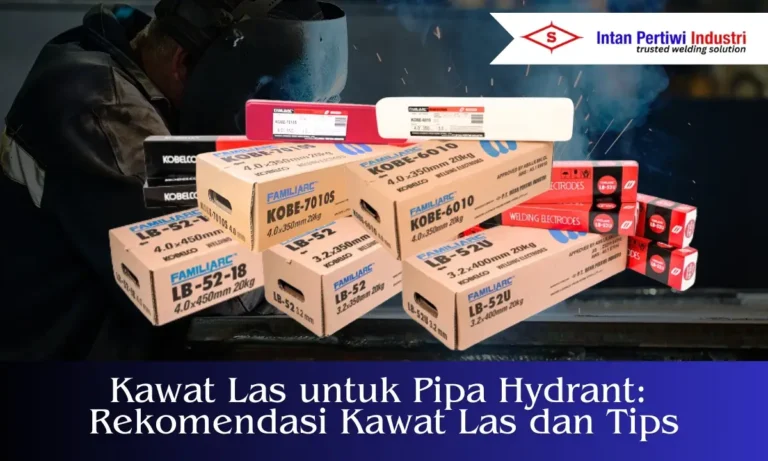
Below are recommendations for KOBELCO electrodes relevant to pipeline requirements, including root pass, filling, and capping, with different characteristics according to the working method.
1. Kobe Steel LB-52
LB-52 electrode is a low hydrogen electrode classified AWS A5.1 E7016, widely used for welding carbon and medium strength steels in structures, pipes, and general fabrication with all position capabilities.
For hydrant pipe work, LB-52 is suitable as a multi-purpose electrode in the filling and closing stages when the root pass has been well formed, because the arc character is stable and its penetration is classified as moderate so it is easy to control.
Commonly used flow guides based on diameter (adjust to machine, position, and fit up):
- 2.6 mm around 55 to 85 A for flat position, and around 50 to 80 A for vertical or overhead position
- 3.2 mm around 90 to 130 A for flat position, and around 80 to 120 A for vertical or overhead position
- 4.0 mm around 130 to 180 A for flat position, and around 110 to 170 A for vertical or overhead position
Important note for consistent results: The LB-52 supports both AC and DCEP polarities, and it is recommended to keep the arc short and re-dry the electrode at 300 to 350 degrees Celsius before use, especially for critical work.
2. Kobe Steel LB-52U
LB-52U Electrode is a low hydrogen electrode specifically designed for pipe work, especially root pass, and is classified AWS A5.1 E7016.
The advantage of LB-52U for hydrant pipes is its ability to form neat root beads and deep penetration, including in joints with limited access, making it suitable for pipe joints that require tight root welds before filling.
Commonly used LB-52U current guide:
- 2.6 mm around 60 to 90 A for flat position, around 50 to 80 A for vertical or overhead, and for root pass mode around 30 to 80 A
- 3.2 mm around 90 to 130 A for flat position, around 80 to 120 A for vertical or overhead, and for root pass mode around 60 to 110 A
The LB-52U supports both AC and DCEP polarities, and there is a dry run at 300 to 350 degrees Celsius for 30 to 60 minutes before use, which is relevant to maintain low hydrogen performance in pipe connections.
3. Kobe Steel LB-52-18
LB-52-18 welding electrode is a low hydrogen electrode with a classification of AWS A5.1 E7018, commonly chosen for structural, pipe, and pressure tank applications due to its mechanical performance and crack resistance.
For the needs of welding electrode for hydrant pipes, LB-52-18 is suitable when you need the strong character of E7018 for filling and closing, especially in areas that demand joint strength and neat bead quality.
LB-52-18 flow guide:
- 2.6 mm around 65 to 95 A for flat position, and around 60 to 90 A for vertical or overhead
- 3.2 mm around 90 to 130 A for flat position, and around 80 to 120 A for vertical or overhead
- 4.0 mm around 130 to 190 A for flat position, and around 110 to 170 A for vertical or overhead
The LB-52-18 uses AC or DCEP, and it is still recommended to re-dry the electrode at 300 to 350 degrees Celsius before use, especially if the packaging has been opened and the field conditions are humid.
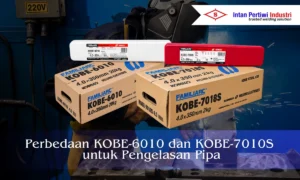
4. KOBE-6010
KOBE-6010 welding electrode is a high cellulose electrode with a classification of AWS A5.1 E6010 and is recommended for pipe root pass work, including vertical down techniques on carbon steel.
Due to its deep penetration, KOBE-6010 is often chosen when the target is to form a well-penetrating weld root on a pipe butt joint before continuing to fill with a low hydrogen electrode.
KOBE-6010 flow guide:
- 3.2 mm around 70 to 130 A
- 4.0 mm around 90 to 180 A
KOBE-6010 is recommended with DCEP polarity.
5. KOBE-7010S
KOBE-7010S welding electrode is a cellulose electrode with a classification of AWS A5.5 E7010-P1, designed for pipe welding with excellent capabilities in vertical down.
If your hydrant pipe work prioritizes field productivity on carbon steel pipe joints and downhill techniques are used, the KOBE-7010S could be an option due to its solid penetration and root formation.
KOBE-7010S current guide:
- 3.2 mm around 60 to 120 A for some common positions, and around 70 to 120 A for downhill
- 4.0 mm around 90 to 170 A for some common positions, and around 100 to 170 A for downhill
The KOBE-7010S is recommended with DCEP polarity.
Tips for Choosing Welding Electrode for Hydrant Pipes
In order to ensure that the selection of welding electrode for hydrant pipes is truly in line with field requirements, use the following logic.
1. Determine the pipe material
Most hydrant installations use carbon steel pipe. If galvanized pipe is used, establish safe work procedures because welding on zinc-coated materials can produce zinc fumes, and zinc exposure is a common cause of metal fume fever.
2. Decide on a root pass strategy first
If the pipe joint is a butt joint and the root pass is a critical point, consider an electrode specifically designed for pipe root welds. The LB-52U is specifically designed for root passes on carbon steel pipe.
Another alternative is cellulose such as KOBE-6010 or KOBE-7010S, which are both intended for pipe work using vertical down techniques.
3. Adjust the electrode diameter to the pipe thickness and welding position.
For medium-schedule pipes, a 3.2 mm diameter is often used because it balances deposition and control. For difficult areas such as overhead, a 2.6 mm diameter is often easier to control.
In principle, the thicker the material and the more comfortable the position, you can increase the diameter and current, but still take care not to burn through at the root.
A flow guide per diameter is available in the data for each product and should be used as a starting point before a short trial.
4. Maintain low hydrogen discipline when choosing the LB series.
Low-hydrogen electrodes benefit greatly from re-drying according to the manufacturer's instructions, for example, to a temperature of 300 to 350 degrees Celsius before use. This is crucial for reducing the risk of moisture-related defects in pipework.
5. Focus on the leak, not just the appearance of the bead
For hydrant pipes, tight roots, adequate side fusion, and cleaning between passes are more important than simply making the bead look smooth.
A stable root pass followed by consistent fill and cap is usually safer than forcing a single pass at high current.
Conclusion
If your goal is to choose a safe welding eectrode for hydrant pipes, start from the weld root first.
For carbon steel pipe root passes, the LB-52U is a low-hydrogen option intended for root passes and all-position work, while the KOBE-6010 and KOBE-7010S are robust cellulose options for vertical down pipe work.
Once the weld root is well established, LB-52 or LB-52-18 can be selected for filling and covering according to strength requirements, arc control, and field conditions, with current reference based on electrode diameter.
Need the most suitable recommendation for your hydrant pipe based on the pipe diameter, schedule, weld position, and root pass method used in the project? Contact the Intan Pertiwi Industri team for technical consultation and suitable KOBELCO product offers, including LB-52, LB-52U, LB-52-18, KOBE-6010, and KOBE-7010S.

FAQs
What is the safest welding electrode for hydrant pipes to prevent leaks?
The most important factor is usually the quality of the root pass. For carbon steel pipes, LB-52U is specifically designed for root passes and helps form a neat root bead and achieve deep penetration, making it often chosen for pipe connections that require a tight root weld.
When is it better to use LB-52 instead of LB-52-18 for hydrant pipes?
LB-52 is a versatile E7016 for structures and pipes with moderate penetration and good control characteristics, while LB-52-18 is the E7018 that is commonly chosen when you want the E7018 characteristics for strong joints and crack resistance in pipe and structure applications.
How many amperes is the hydrant pipe welding for 3.2 mm electrodes?
Reference examples: LB-52 3.2 mm is about 90 to 130 A for flat position, LB-52U 3.2 mm is about 90 to 130 A for flat position and for root pass mode about 60 to 110 A, while KOBE-6010 3.2 mm is about 70 to 130 A. Always adjust according to position, root gap and weld pool response.
Can galvanized hydrant pipes be welded?
Practically feasible, but proper safety controls are required because welding galvanized steel can produce zinc oxides, and zinc exposure is a common cause of metal fume fever. Ensure adequate ventilation and safe work procedures.
Which is more suitable for pipe root pass, LB-52U or KOBE-6010?
LB-52U is specifically designed for root passes on carbon steel pipe using a low-hydrogen approach. KOBE-6010 is E6010 cellulose, also designed for deep-penetration pipe root passes using vertical down techniques. The final choice depends on the project's working methods, procedural requirements, and the standards being followed.
What is the simplest step to ensure that the hydrant pipe weld is neat and does not leak easily?
Ensure a tight and consistent fit, a stable root pass, clean slag between passes, and select an appropriate charging electrode, such as LB-52 or LB-52-18, with a current rating based on the diameter data. For the low-hydrogen series, regular re-drying also helps maintain consistent results.